
Pool Hydrostatic Valve: Main Drain & Replacement
A pool hydrostatic valve sits in an in-ground main drain port with a pebble tube and opens under high groundwater pressure so an empty shell does not lift.
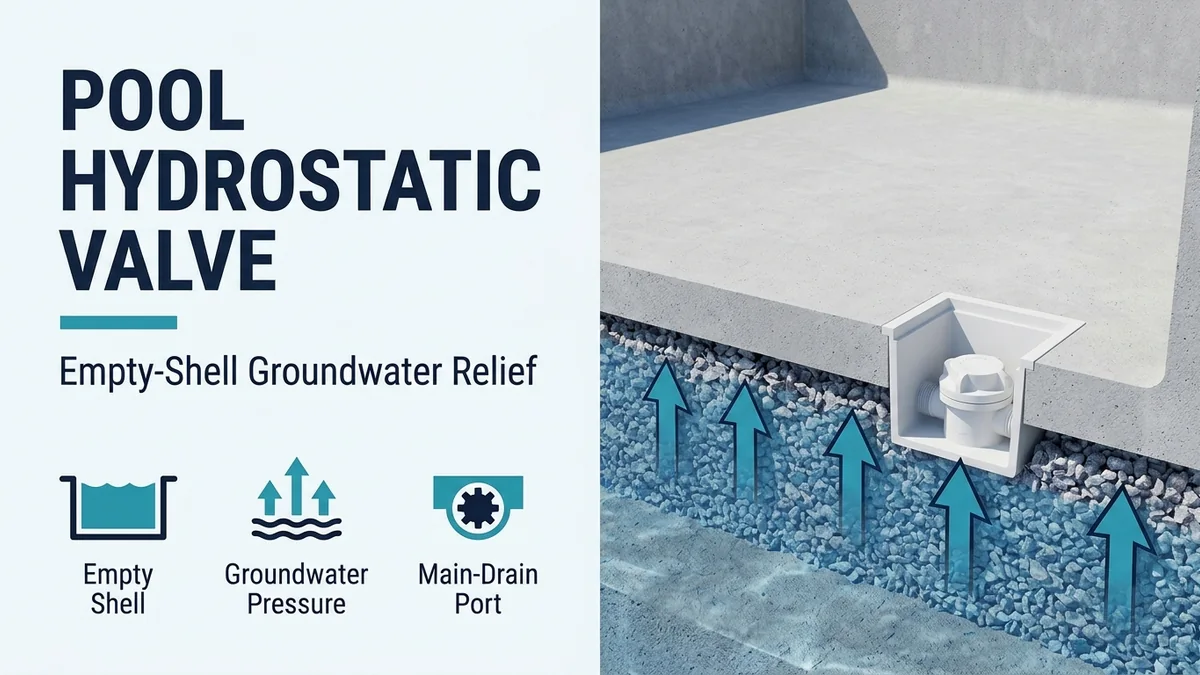
A pool hydrostatic valve (also called a hydrostatic relief valve) is a floor relief device placed at the bottom of an in-ground pool and secured into one of the pool main drain ports with a pebble tube that prevents clogging. When an in-ground pool is empty during construction or draining, nothing weighs the vessel down, and excessive groundwater pressure outside the shell causes the valve to open and admit groundwater into the pool rather than lifting the pool out of the ground. Under Maryland COMAR 10.17.01.30, an owner shall ensure that an in-ground recreational pool, semipublic pool, or public spa has hydrostatic relief valves as needed to relieve the hydrostatic pressure from groundwater when the pool or spa is empty.
Waterway Plastics installation guidance specifies installing the hydrostatic relief valve upon initial installation of the pool or when renovation work is being done, while Trouble Free Pool leak-detection guidance notes that drain hydrostatic plugs or valves can also become defective and result in water loss. Coordinate the main-drain port and concrete sump detail within the pool accessories scope before casting, and review suction-outlet grate capacity separately in our VGB main drain cover flow rating and sump depth guide.
What Does a Hydrostatic Relief Valve Do When a Pool Is Empty?
A hydrostatic relief valve opens when excessive groundwater pressure builds up beneath an in-ground pool, allowing groundwater into the basin so external upward pressure does not lift an empty vessel out of the ground. Trouble Free Pool notes that some pools rely on internal water pressure to keep the shell pressed down and, where applicable, to keep a vinyl liner firmly in place and walls upright. Waterway Plastics explains that while an in-ground pool is empty during construction or draining, there is nothing weighing the pool down, making that empty interval the time when the pool vessel is most vulnerable.
In areas with a high groundwater table, Trouble Free Pool warns that upward pressure can disrupt the pool shell. Completely draining a pool can create several problems documented by Trouble Free Pool: vinyl liner shrinkage or floating, structural damage from hydrostatic pressure, surface cracking, equipment damage if the circulation pump loses prime, and risk of the pool floating in severe groundwater conditions. Where water replacement is needed without exposing the bare floor, a controlled water exchange minimizes those risks, and if a leak is suspected at the bottom of the pool, every option should be evaluated ahead of time before letting the water level get too low.
| Basin Condition | Documented Groundwater and Structural Response |
|---|---|
| Empty in-ground pool with functional hydrostatic relief valve | Nothing weighs the empty vessel down during construction or draining; the valve opens under excessive groundwater pressure and admits groundwater into the pool |
| Empty in-ground pool without hydrostatic relief in high groundwater | Without a hydrostatic relief valve, high groundwater pressure could lift the pool out of the ground, and a complete drain can also float the shell, crack surfaces, shrink or float a vinyl liner, or damage equipment if the pump loses prime |
| Controlled water exchange instead of a complete drain | Retains internal water weight to keep the shell pressed down and minimizes complete-drain risks of shell floating, structural damage, liner shrinkage, and lost pump prime |
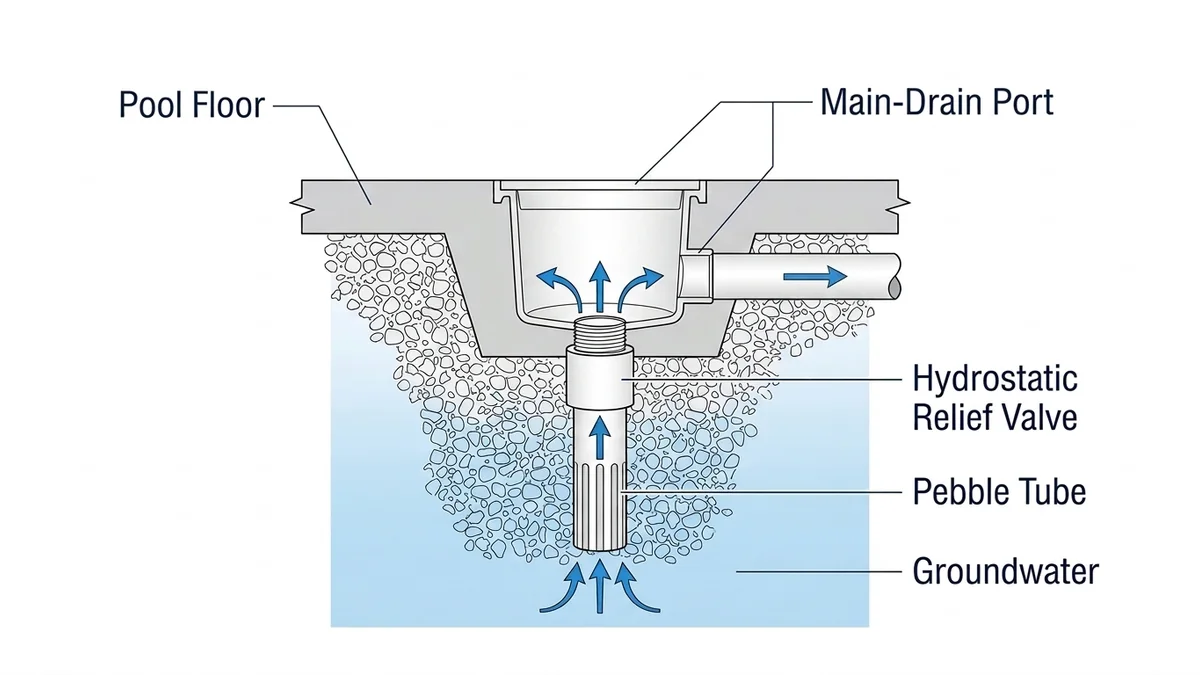
Main-drain sump section arrangement: the hydrostatic relief valve secures into a main-drain port, and a pebble tube is required to prevent the valve from clogging.
Where Does a Pool Hydrostatic Valve Sit in the Main Drain?
A pool hydrostatic valve sits at the bottom of an in-ground pool, secured into one of the ports inside the pool main drain with a pebble tube required to prevent the valve from clogging. Waterway Plastics defines a main drain as a suction opening at the bottom of a pool or spa into which water is drawn by the circulation pump. Because both COMAR 10.17.01.30 and Waterway Plastics installation guidance address in-ground pools and spas, project submittals apply this main-drain port and pebble-tube arrangement to in-ground vessels exposed to groundwater when empty.
Keep the groundwater hydrostatic relief valve and its pebble tube separate from federal suction-entrapment hardware on the same sump. Under 16 CFR 1450.3, implementing the United States Virginia Graeme Baker Pool and Spa Safety Act, each swimming pool or spa drain cover manufactured, distributed, or entered into commerce in the United States shall conform to the entrapment protection standards of ANSI/APSP/ICC-16 2017, approved on August 18, 2017, with specified exclusions. Similarly, 15 USC 8003 requires drain covers to conform to ASME/ANSI A112.19.8 or a successor standard, and provides that each public pool and spa in the United States with a single main drain other than an unblockable drain shall be equipped with 1 or more of the listed anti-entrapment devices or systems. One statutory anti-entrapment option in 15 USC 8003(c) is a gravity drainage system that utilizes a collector tank; that entrapment collector tank is distinct from the hydrostatic valve's pebble tube, which prevents the floor relief valve from clogging. Suction-outlet flow ratings belong to the defined SOFA cover, mounting, and sump configuration detailed in our VGB main drain cover flow rating and sump depth guide.
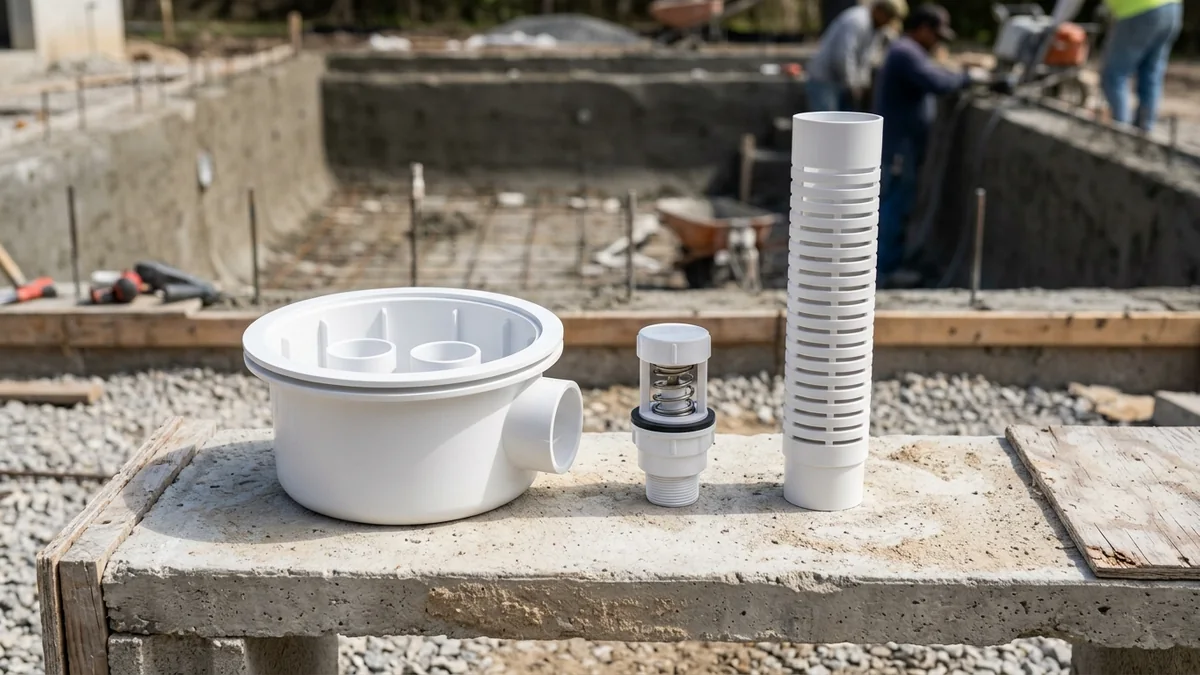
Coordinate the main-drain port, the hydrostatic relief valve, and the mating pebble tube before concrete placement or renovation work begins.
When Should You Install or Replace a Pool Hydrostatic Valve?
Install a pool hydrostatic valve upon original installation of an in-ground pool or during renovation work, and service or replace the assembly when a defective hydrostatic plug or valve causes water loss at the main drain. Waterway Plastics notes that hydrostatic relief valves are most important during construction or whenever the pool needs to be drained.
Before attributing a dropping water level to the floor drain, compare daily loss against normal seasonal evaporation. Trouble Free Pool states that in the summer it is reasonable to lose 1/8 to 1/4 inch of water per day to evaporation and wind, whereas continued water loss around the main drain can come from a defective drain hydrostatic plug or valve. In areas with a high groundwater table, upward pressure can disrupt the shell if water weight is removed, so when a leak is suspected at the bottom of the pool, consider all options ahead of time before letting the water level get too low. Whenever sump service involves opening the suction grate, check the cover assembly before refilling: damaged, missing, or loose covers and associated components require correction before bathers use the pool.
| Field Scenario | Documented Benchmark and Action |
|---|---|
| New in-ground construction or basin renovation | Empty shell has nothing weighing it down; secure the hydrostatic relief valve into a main-drain port with a pebble tube to prevent clogging |
| Summer water-level drop within 1/8 to 1/4 inch per day | Reasonable summer water loss from evaporation and wind; continued loss can come from a defective drain hydrostatic plug or valve |
| Suspected floor leak at a defective hydrostatic plug or valve | Defective drain hydrostatic plugs or valves can lose water while high groundwater pushes upward; evaluate all options ahead of time before letting water get too low |
| Main-drain cover removed for sump inspection | Suction cover and mounting hardware belong to the defined SOFA; correct any damaged, missing, or loose covers and associated components before bathers use the pool |
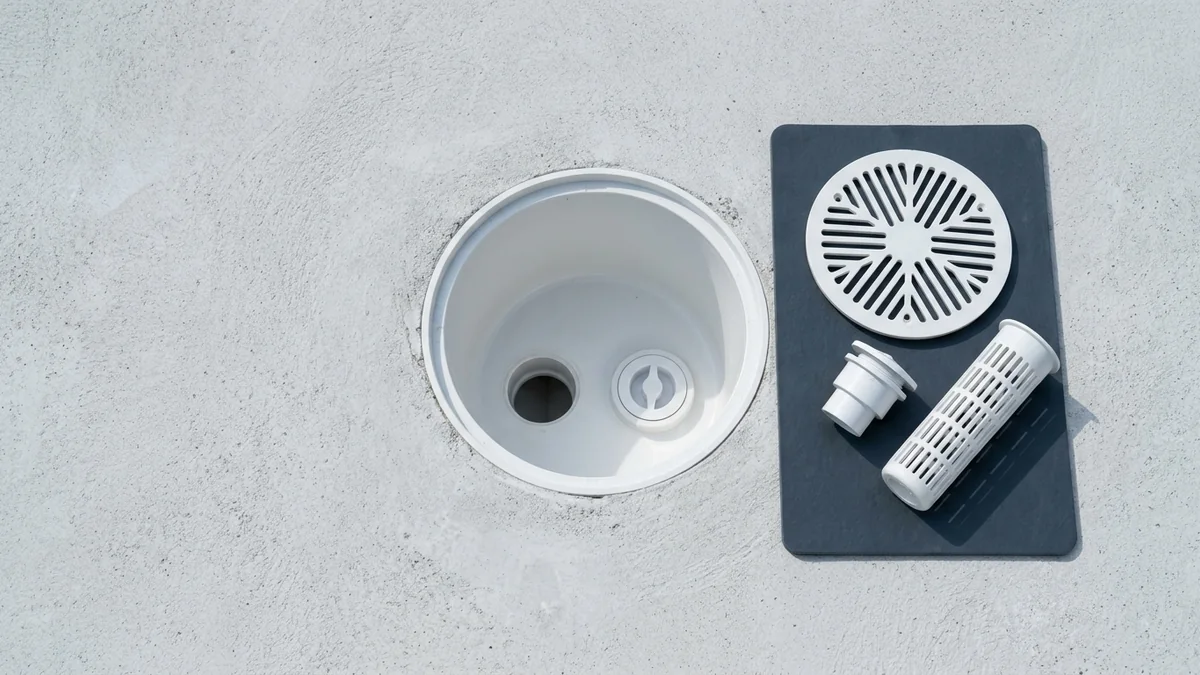
During pool construction or renovation, verify the main-drain port interface, replacement hydrostatic valve, pebble tube, and drain cover condition before refilling.
What Belongs on a Main-Drain Valve and Pebble Tube BOM Check?
A main-drain hydrostatic valve and pebble tube procurement check records whether the shell is an in-ground basin that will be empty, which main-drain port receives the valve, whether the pebble tube is included, and the connection standard and material on both mating ends. When the pool accessories package includes suction outlets, coordinate their rated flow and concrete sump detail before casting.
Use our equipment BOM template to document the valve connection and the mating main-drain port or fitting separately, including the connection standard and material on each side. A matching nominal size alone leaves the connection type and supplied parts unresolved. For repeated identical scopes across multi-basin developments, calculate order quantities with the BOM rule: order quantity = number of pools × approved units per pool + separately approved spares. Keep grate flow rating, dual-outlet spacing, and sump-depth certification on our VGB main drain cover flow rating and sump depth guide.
| Procurement Line Item | Specification Detail to Record |
|---|---|
| In-ground shell and main-drain port | Confirm in-ground pool or spa empty intervals under COMAR 10.17.01.30 and identify the main-drain sump port where the valve secures prior to casting |
| Pebble tube inclusion | State explicitly whether the required anti-clogging pebble tube is supplied with the hydrostatic relief valve or ordered as a separate line item |
| Connection standard and material on both sides | Record the valve connection and the mating main-drain port connection standard and material separately, as nominal size alone leaves supplied parts unresolved |
| Multi-pool quantity and SOFA cover handoff | Apply order quantity = number of pools × approved units per pool + separately approved spares, and keep SOFA cover flow ratings on the drain-cover submittal |
Sources
- Maryland Code of Regulations COMAR 10.17.01.30 — Hydrostatic Relief Valves (Cornell Law School Legal Information Institute)
- 16 CFR 1450.3 — Virginia Graeme Baker Pool and Spa Safety Act Regulations, Incorporation by Reference of ANSI/APSP/ICC-16 2017 (eCFR)
- 15 USC 8003 — Federal Swimming Pool and Spa Drain Cover Standard (GovInfo)
- Waterway Plastics, Resources FAQ: What Is a Main Drain and How Do You Install a Hydrostatic Relief Valve.
- Trouble Free Pool, No-Drain Water Exchange and Pool Leak Detection Guidance.