
Cover benefits · Gulf projects
Pool cover benefits in the Gulf: choose by the job
An uncovered pool loses water to evaporation and collects airborne debris. A well-fitted cover reduces both while closed; heating, cooling and child-safety requirements determine which cover belongs in your project.
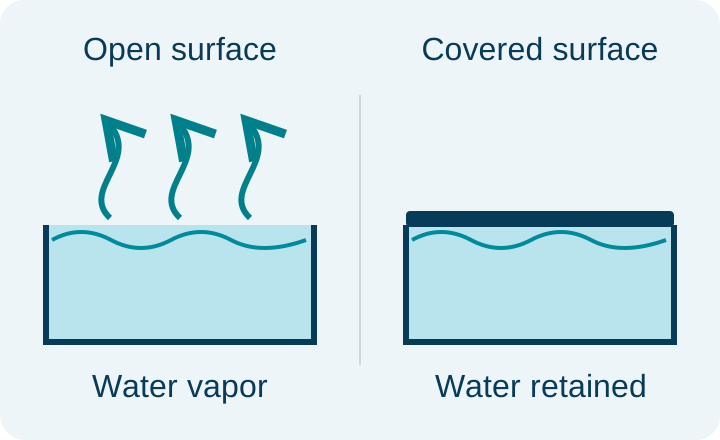
Start with the benefit your project needs
Choose the cover material and installed configuration first, then decide how it will be deployed. “Automatic” describes the drive; it does not, by itself, prove evaporation performance or child-safety compliance.
| Priority | What to compare | Dominant failure mode & prevention | Explore |
|---|---|---|---|
| PriorityLess make-up water | What to compareSurface coverage, material and the hours the cover will actually stay closed. | Dominant failure mode & preventionUncovered water continues to evaporate. Check fit around steps and features; choose a closing routine the operator can maintain. | ExploreWater savings |
| PriorityLess debris in the water | What to compareA retained cover, edge details and access for cleaning. | Dominant failure mode & preventionDebris remains on the cover or enters at gaps. Agree cover and track care with the installer; mesh passes some debris. | ExploreSand and dust |
| PrioritySeasonal temperature control | What to compareHeat retention in winter and solar behaviour in summer. | Dominant failure mode & preventionA closed cover also restricts evaporative cooling. Review material and operating schedule with the heating or chiller contractor. | ExploreSeasonal energy |
| PriorityAn additional access barrier | What to compareA documented safety-cover configuration, correctly installed and secured. | Dominant failure mode & preventionA loose or unsecured cover can create a hazard. Obtain the exact model’s documentation and retain supervision and local barriers. | ExploreSafety requirements |
Water savings: separate a closed-cover result from a yearly forecast
The January 2016 Cal Poly study measured 93.9% evaporation reduction for its solid track cover. The solid covers stayed in place throughout the trial, apart from the stated cleaning and measurement exceptions. Use that result as a covered-state reference, with the study’s conditions attached.
Your annual result depends on weather, exposed water area and how often the cover is open. Water lost through leaks, backwashing or splash-out also needs separate attention. Record make-up water and cover use before building a payback case.
Dust control shifts part of the cleaning onto the cover
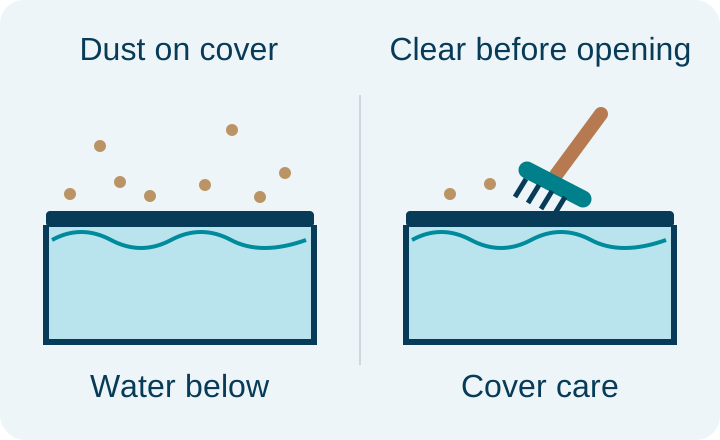
A closed solid cover can intercept debris before it reaches the water. It still needs cleaning. EPA guidance distinguishes solid covers from mesh, which allows water and some debris to pass through; liquid evaporation suppressants provide no debris barrier.
Clear accumulated debris before opening, following the selected cover’s manual. Keep tracks and the storage area accessible for inspection. Do not assume that a cover eliminates filtration, water testing or post-storm checks. For windy sites, ask for the selected configuration’s retention and operating instructions rather than assuming that any loose sheet will perform like a retained system.
Winter heat retention is useful; summer cooling needs its own plan
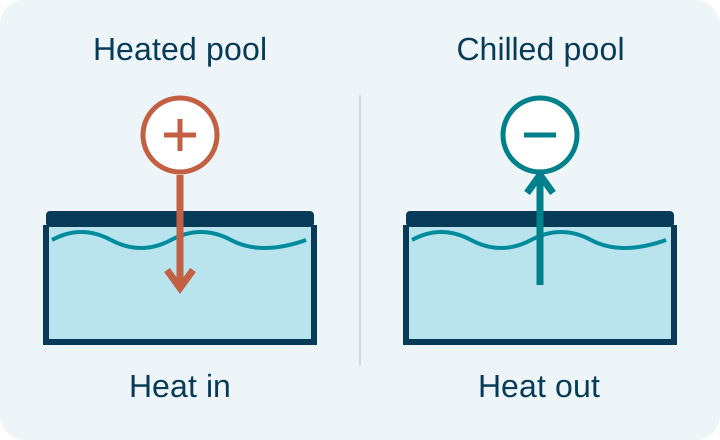
Evaporation carries heat away with the water vapor. A cover restricts that loss, which helps a heated pool retain warmth. In summer, the same effect can retain unwanted heat. A cover does not actively cool the pool.
EPA describes solar and bubble covers as products designed to use sunlight to heat water. For Gulf summer use, review opaque or reflective cover options rather than choosing a transparent solar bubble cover. Colour or opacity alone does not guarantee a lower water temperature.
For a chilled pool, agree the cover material and closing schedule with the chiller contractor. The chiller removes heat; the cover changes heat exchange at the surface. Assess total energy use under the actual sun, wind, water temperature and usage pattern before assigning a saving.
Specify safety separately from convenience
A cover sold to reduce evaporation is not automatically a safety cover. ASTM F1346-23’s public scope covers safety-cover performance and labeling, with correct installation and use required. Request the documents for the exact model and configuration in your quotation; a standard’s name in a brochure does not establish that configuration’s compliance.
Keep adult supervision and the barriers required by the local authority. Remove the cover completely before swimming, keep people off its surface, control access to its operation and address standing water according to the model’s instructions. A cover is not a walkable deck. Confirm the installer’s handover and inspection requirements before acceptance.
Compare the cost of using the cover, as well as buying it
Compare quotations over the same ownership period and with the same scope. Water tariff, tanker deliveries, cleaning labour and energy use affect the business case differently at each site. Keep projected savings separate from the costs you can confirm.
- Supply and installation
- List the cover, drive or roller, retention system, storage arrangement, local installation and commissioning. Confirm what the delivered price excludes.
- Routine care
- Allow for cover cleaning, track or mechanism care and inspection. Assign the work to an operator before choosing automatic or manual deployment.
- Replacement and downtime
- Ask for cover material and wear-part references, warranty exclusions and replacement access. Use condition and written terms, not a fixed Gulf fabric-replacement interval.
- Measured running costs
- Compare make-up water, treatment, cleaning and heating or cooling energy over comparable periods. Investigate leakage and weather differences before crediting the cover.
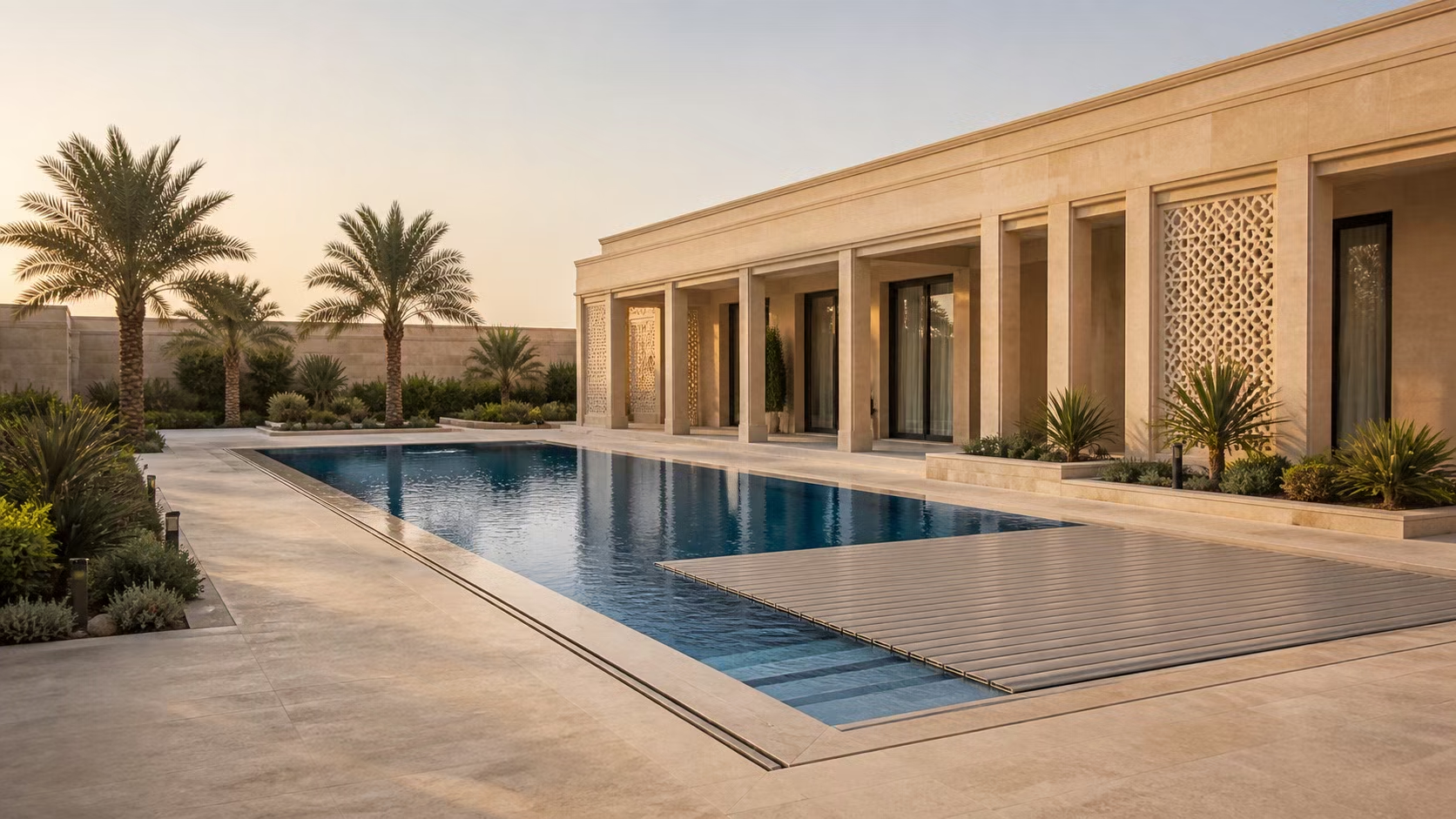
Send the project details that change the cover choice
Send your main priority with the pool drawing and photos. PoolProject can discuss the supply route and configuration to review; dimensions, documented safety requirements and local installation responsibilities belong in the written quotation.
| Send | Why it matters | Example format |
|---|---|---|
| SendCountry, city and main priority | Why it mattersSets the discussion around water, dust, temperature or a safety specification. | Example formatCity + “less daily cleaning” |
| SendPool plan, section and edge photos | Why it mattersShows dimensions, steps, overflow details and available storage space. | Example formatMarked drawing + clear site photos |
| SendNew or existing pool; heating or chiller | Why it mattersHelps review installation constraints and seasonal use. | Example formatExisting pool + chiller installed |
| SendWho operates the cover and when | Why it mattersTests whether manual or powered deployment fits everyday use. | Example formatOperator + expected open/closed periods |
| SendRequired safety documents and supply scope | Why it mattersDefines what must be evidenced and who installs locally. | Example formatProject specification + supply/installation split |
The WhatsApp message opens first. Add drawings and photos in the chat; the button does not upload files.
Method and sources
Updated October 2026. This guide compares surface-cover functions and procurement questions. The study result is a covered-state reference, not a Gulf annual forecast. Confirm fit, material, installation details and supporting documents for the selected configuration before ordering.
- Cal Poly / National Plasterers Council, January 2016: evaporation trial, Table 1 and covered-state limitations (pp. v–vi).
- US EPA WaterSense at Work, November 2023, section 5.3 (pp. 2–4): water-loss mechanisms, cover categories and solar-cover purpose.
- ASTM F1346-23: public scope of safety-cover performance and labeling requirements. Scope summary only.
- Tracked fabric-cover owner’s manual, 800235 REL-0001 (pp. 4–5, 10, 12): safety precautions and cover/track care. This maintenance reference is specific to that system; the selected product’s instructions govern its use.