
China-to-GCC Pool Equipment Lead Times
A contractor-focused schedule for coordinating design freeze, production, QC, consolidation, sea freight, clearance and site delivery.
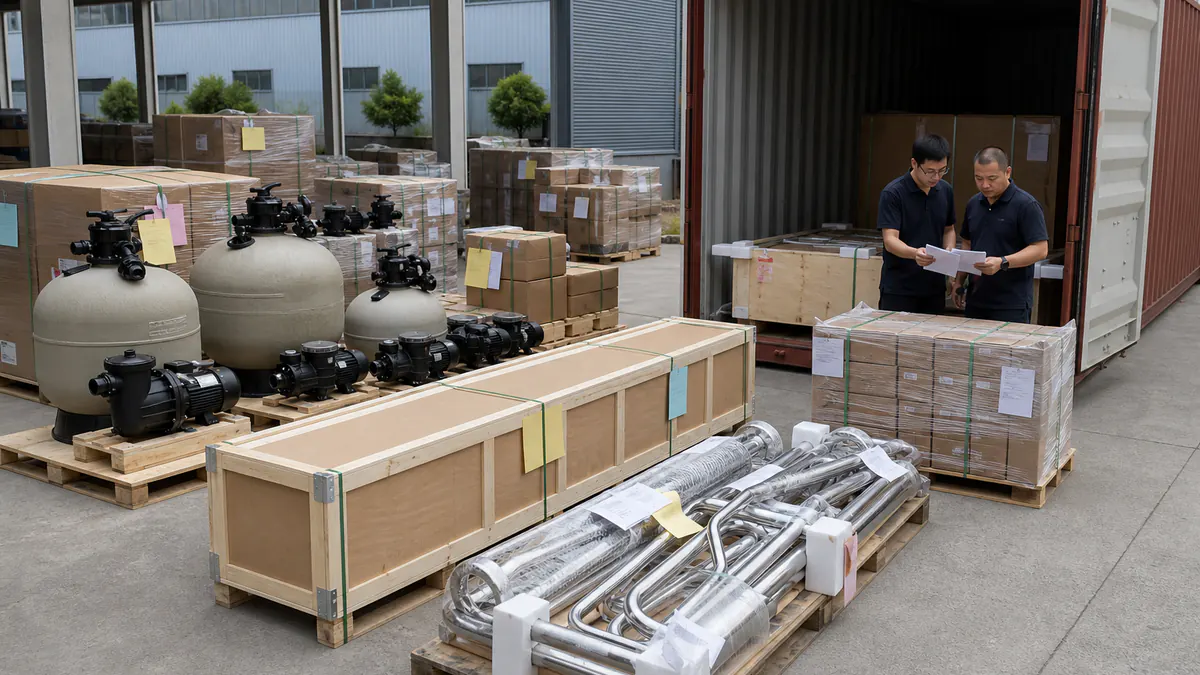
When a site manager asks when the equipment will arrive, the vessel transit is only part of the answer. The pumps may be ready while the custom cover is still in production. One factory may be waiting for an approved nameplate. Another may have packed before the final document check.
That is why a useful schedule starts with the required-on-site date and works backward through the full supply chain.
Carrier routes, port conditions and bookings change. Use a current forwarder quotation for the live sailing. The framework below helps you see what must happen before and after it.
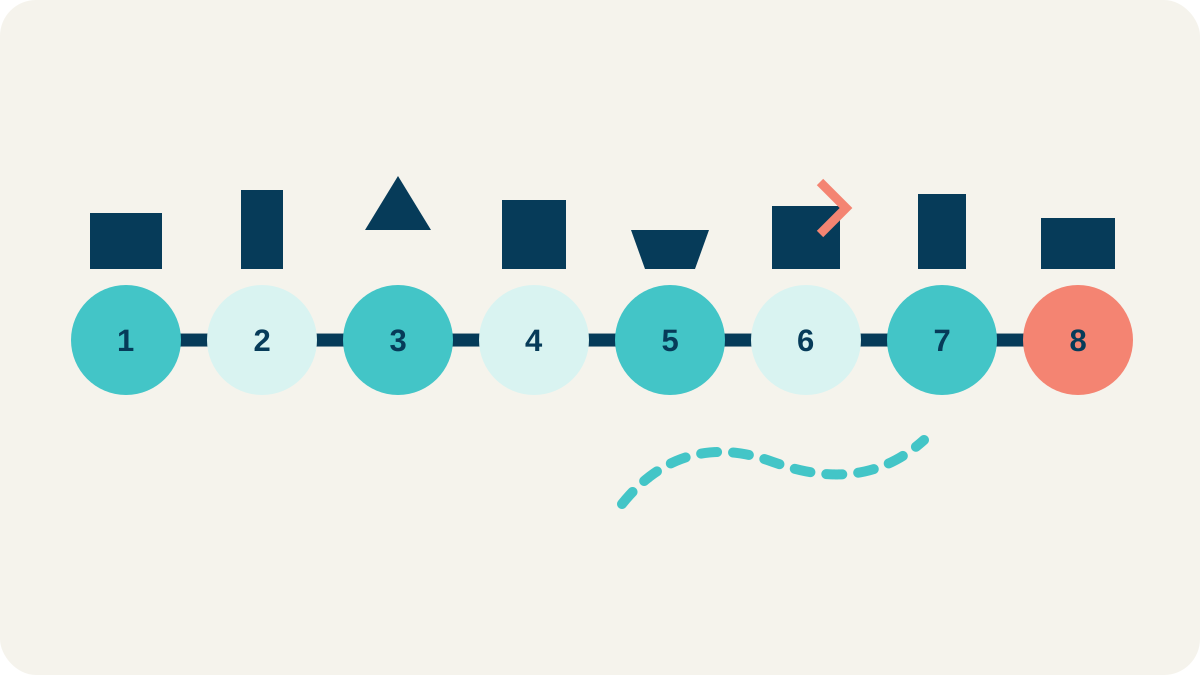
Put all eight stages on one schedule
1. Design freeze
Approve dimensions, models, materials, electrical ratings, quantities and commercial scope. Give each remaining TBC item an owner and decision date.
2. Production readiness by item
Record lead time for each product, not only for each supplier. A custom cover, pump, filter and accessory order may have different ready dates even when one company coordinates them.
3. Order-specific QC
Agree which evidence is needed before packing. This may include model and nameplate photos, quantities, key dimensions, accessories, finish and packaging. "Inspection included" is too vague to manage. Define the actual check under quality inspection support.
4. Consolidation and export packing
Plan when each supplier will deliver, how crates will be marked and which items must remain separate. Include storage, extra handling and the effect of one late item when comparing consolidation costs.
5. Booking and export documents
Carrier space, cut-off, documentation and port gate-in all happen before sailing. Missing a cut-off can have more impact than a small difference in the quoted transit.
6. Sea transit
Use the current carrier or forwarder schedule for the actual origin and destination. Record whether the route is direct or transshipped and how schedule changes will be reported.
7. Destination clearance
Assign the importer of record, broker and document-review deadline. Saudi cargo may need product-level preparation, so open the SABER and SASO guide before goods are ready.
8. Site receiving
Confirm the delivery address, access hours, lifting equipment, unloading responsibility and safe storage. Delivery to a city and receipt inside a plant room are not the same scope.
Work backward from the handover plan
Start with the commissioning date, installation duration and equipment-required-on-site date. Then allow for inland delivery and clearance, current sailing and operational buffer, consolidation and QC, production by item, and technical approval.
The resulting design-freeze date is the procurement deadline that matters. If it has already passed, bring the decision into the open. You may need to change the shipment sequence, use a different transport method for a critical item, adjust scope or revise the handover expectation.
Consolidation is a project choice, not a default
Combining a pool equipment package, cover system and pool accessories can produce clearer crate marking, one document review and fewer arrival events.
It also creates a dependency. One late product can hold everything else. Compare two practical scenarios:
- wait for the full package and ship together;
- move the critical-path items separately and consolidate the balance.
The right choice depends on site priority, cargo volume, destination charges and actual readiness dates.
What to send for a planning review
Share the BOM or item list, supplier locations and readiness dates if the goods are already ordered, destination port, final city, required-on-site date and delivery boundary. Add the importer or broker role and any special packing, dangerous-goods or document requirements.
Our China-side project supply scope can cover the production schedule, supplier readiness, agreed QC evidence, packing information and forwarder inputs. The customer and its importer or broker handle local import decisions, duties, clearance and site receipt unless another scope is agreed in writing.
Share the list, destination and site date in WhatsApp. We will map the critical path and open assumptions before discussing a freight number. Your project team gets a working schedule instead of a sailing estimate on its own.