
Pool Equipment BOM Checklist for Supplier Quotes
A practical BOM structure for pool contractors comparing pumps, filters, heating, controls and accessories across a coordinated China supply package.
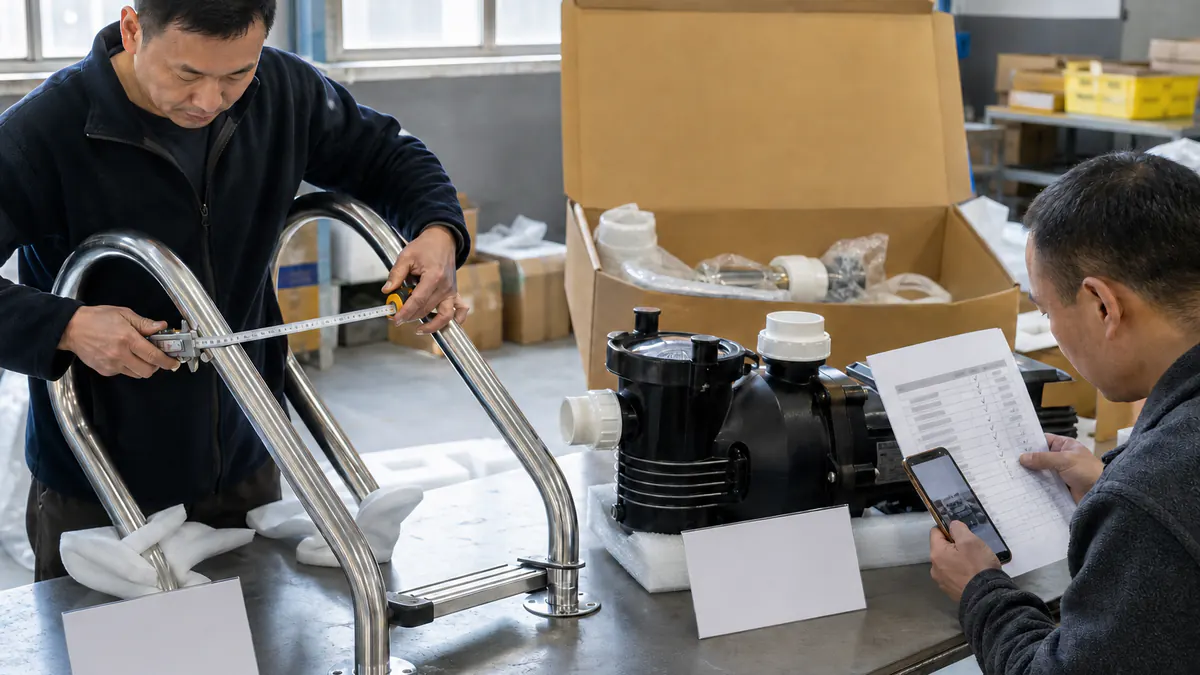
"Pump x 2, filter x 2" looks like a bill of materials, but it does not give you a quotation you can safely compare or pass to a client. One supplier may select two operating pumps. Another may assume one duty and one standby. A third may price a different flow because the duty point was missing.
The result is familiar to pool contractors: several fast prices, followed by hours of messages to work out what each one includes.
A useful BOM puts the technical duty, quantity, electrical basis, approval status and delivery boundary on the same line. You can keep unknown values as TBC. The point is to expose them before an order is placed.
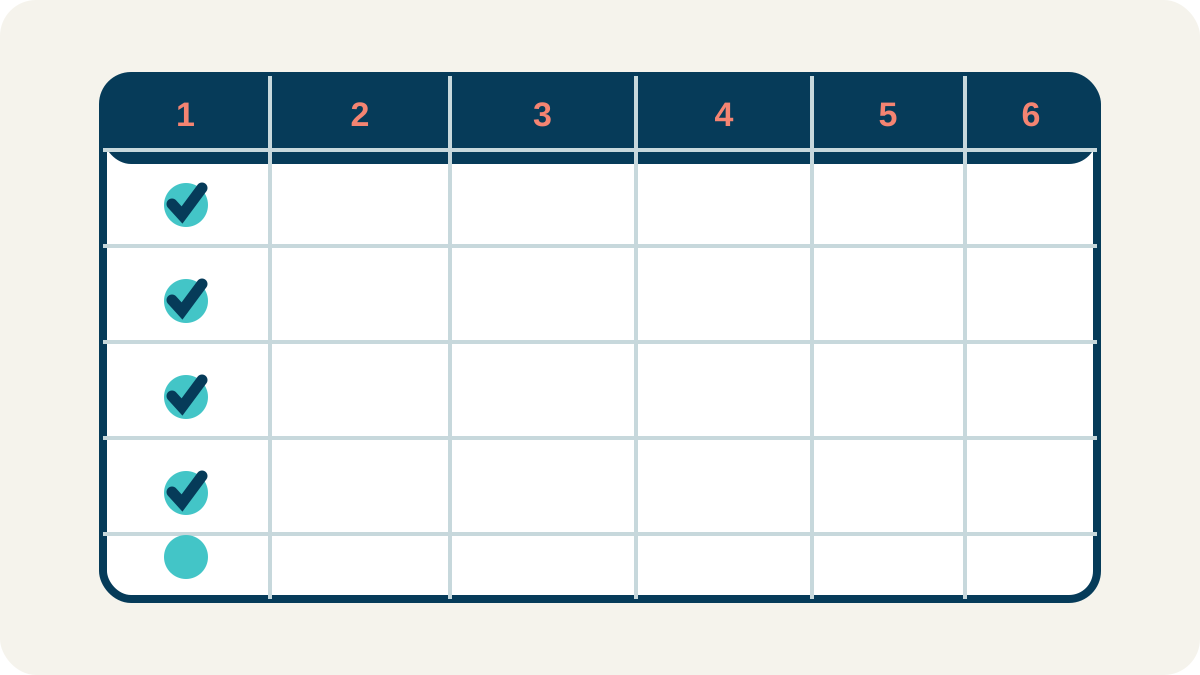
Six fields every equipment line needs
1. Name the item and its job
Use a recognizable name plus the service: filtration pump, backwash pump, sand filter, heat pump, dosing set, underwater light or access ladder. This avoids confusion when several pumps or controls serve different parts of the project.
2. Record the required duty or specification
For a pump, include flow and head. For a filter, include diameter, design flow or media requirement. Heating equipment needs capacity and design conditions. A control item needs its function and interfaces.
If the consultant has not approved the duty, reference the design basis and mark the selection open. Do not allow a supplier assumption to become the hidden project requirement.
3. Explain the quantity
Write whether the units operate together or follow a duty/standby arrangement. The number alone does not describe the operating philosophy.
4. Add the electrical block
Record voltage, frequency, phase and rated power where known. Use the project electrical information, not a country-level assumption. The GCC voltage and frequency checklist covers the checks for pumps, heating, controls and lights.
5. State the brand and equivalent rule
Make it clear whether the named brand is mandatory, preferred or open to an approved equivalent. If an alternative is allowed, define what has to match: duty point, material, efficiency, envelope, connection, controls, certification or warranty.
Without that rule, an "equivalent" can mean whatever makes the supplier price look attractive.
6. Give the destination and site date
"GCC project" is not enough for packing or freight planning. Add the city or port, the required-on-site date and the delivery boundary you expect the supplier to price.
Add the project information once
The line items need a short project brief alongside them:
- pool type, volume and design basis;
- water-treatment method and design water temperature;
- plant-room plan, door size and access constraints;
- pipe material and connection standards;
- project electrical summary;
- required documentation and approval process;
- destination, delivery term and required-on-site date.
You can start with the BOM template resource or send the existing consultant schedule through the pool equipment package page. There is no need to rebuild a complete spreadsheet before the first review.
The four gaps that usually waste quotation time
A pump without a duty point
Ask what flow and head each offered unit will deliver, and under which operating condition.
Electrical data copied across the project
Separate approved values from provisional values, then check the offered model against them.
A brand name without an approval basis
Decide whether alternatives are allowed and which characteristics must remain equal or better.
A delivery price with no boundary
List what is included: export packing, documents, freight, destination charges, customs clearance and site delivery. If it is absent, do not assume it is included.
For scopes coming from several factories, use the China-to-GCC shipping and consolidation guide before separate readiness dates turn into a site delay.
Keep approval and evidence tied to the same BOM
Once the gaps are visible, record the proposed model and datasheet beside each line. After technical approval, freeze the accepted selection and remaining TBC items. Before shipment, collect the evidence agreed for that order, such as model, nameplate, quantity and key dimension photos. The packing list should then match the approved BOM.
For a combined China order, we organize this workflow across the equipment and accessory suppliers. The customer's consultant or engineer keeps final technical approval. If the order needs independent checks before shipment, define them under a separate quality inspection support scope.
The BOM can come through WhatsApp as Excel, PDF or clear photographs. We first mark the missing duties, electrical data and commercial boundaries. Your team then has one coordinated comparison instead of several disconnected supplier replies.