
SS304 vs SS316 Pool Fittings
A GCC contractor guide to specifying stainless pool ladders and handrails by chloride exposure, fabrication, finish, fixing and maintenance.
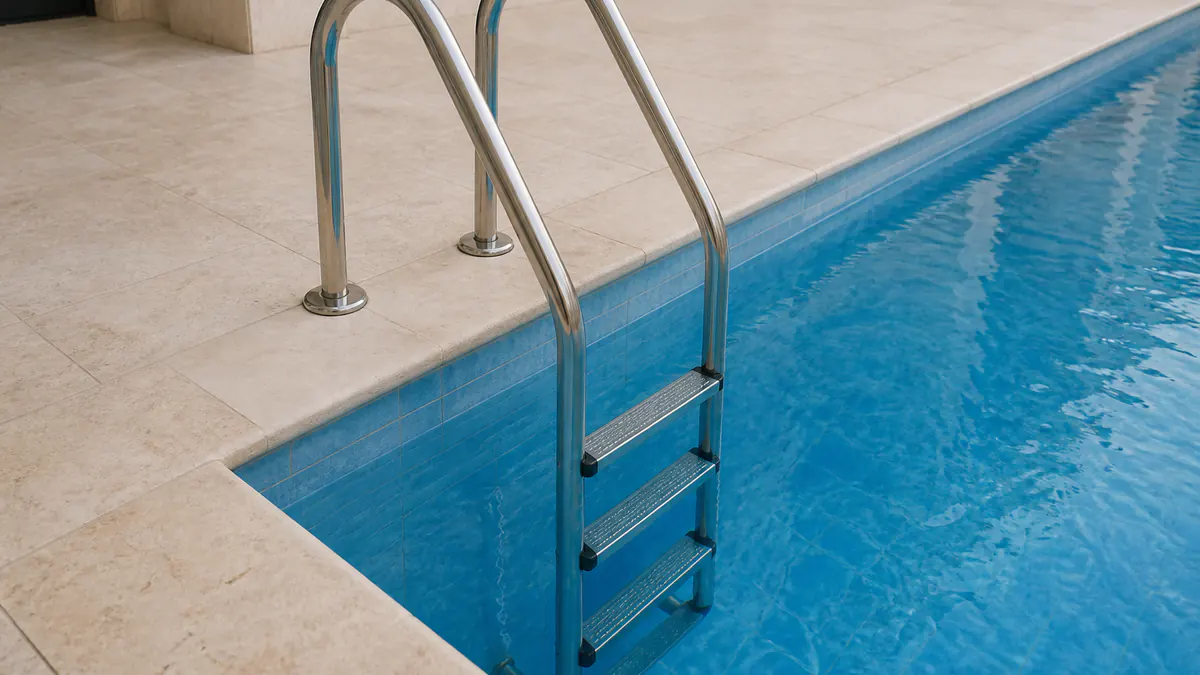
A supplier quote that says "stainless steel ladder" leaves the contractor carrying most of the risk. SS304 and SS316 can look identical when a crate is opened. The difference shows later, under the actual pool water, coastal air, cleaning and maintenance conditions.
Specify the grade, but do not stop there. Fabrication, surface finish, fixing detail and exposure all affect how visible metalwork performs.
What the grade tells you
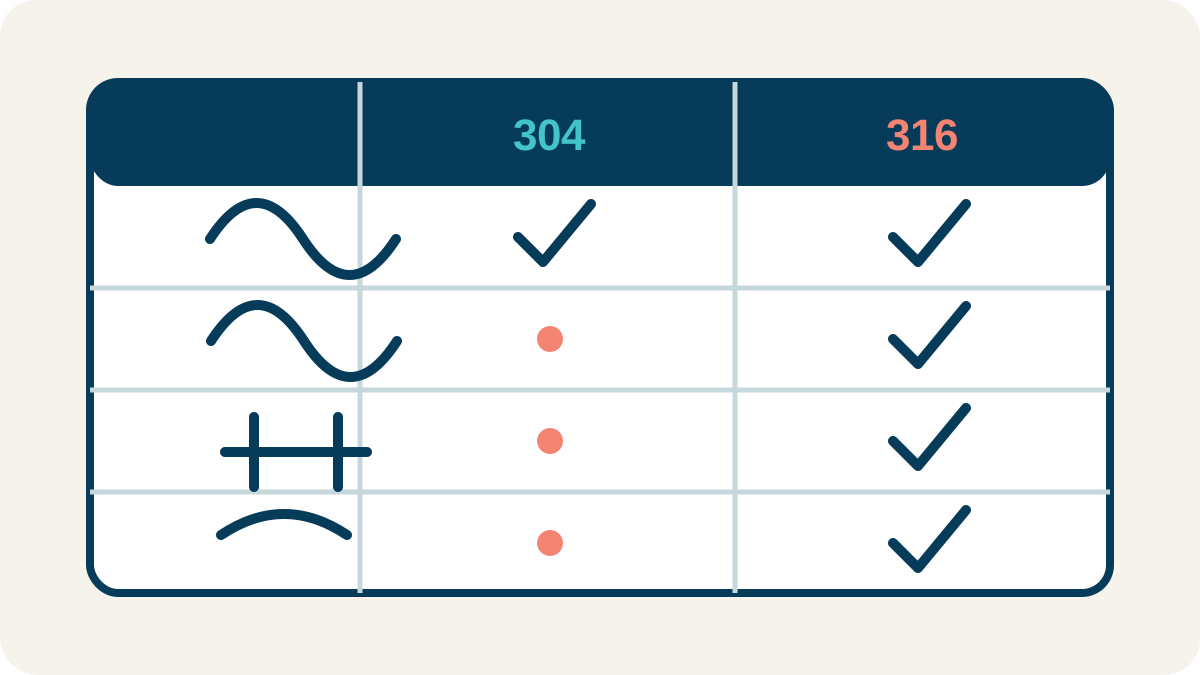
SS304 is a widely used general-purpose austenitic stainless steel. SS316 contains molybdenum, which generally improves resistance to localized corrosion in chloride-bearing environments. Outokumpu's material overview explains how molybdenum and other alloying additions increase corrosion resistance in more demanding austenitic grades.
This is why SS316 is often reviewed for salt-chlorinated pools, coastal air and other higher-chloride conditions. It is not immune to corrosion. Difficult exposure may require closer material review, better detailing or a higher-alloy option.
Describe the exposure before comparing price
Water treatment
State whether the pool uses conventional chemical dosing, salt chlorination or another method. Include the operator's intended water-chemistry range where it is available.
Marine air
Avoid a simple distance-to-sea rule. Wind, salt deposition, shelter, cleaning and direct spray all change the exposure. Describe the site and let the project engineer classify it.
Indoor atmosphere
Indoor metalwork can still sit in chlorinated moisture above the waterline. Ventilation, condensation and cleaning practice matter.
Maintenance plan
Freshwater rinsing, suitable cleaning products and regular inspection belong in the operating plan. No common poolside stainless grade should be sold as maintenance-free.
Turn "stainless" into a usable specification
Add these fields to every ladder, handrail and fitting line:
- grade and material designation;
- tube diameter and wall thickness;
- dimensions or approved model reference;
- fixing method and anchor scope;
- surface finish and finish direction;
- weld finishing and post-fabrication treatment;
- pool-water and atmospheric exposure;
- material documentation required;
- maintenance and warranty conditions.
Keep these items in the combined pool equipment BOM. That makes the offered product easier to compare with the consultant's requirement and the other accessory lines.
Review the assembly, not only the steel label
Ask for the exact model datasheet and available material evidence. Look at welds, crevices, mixed-metal contact, drainage and any area where chlorinated water can remain trapped. A poorly detailed SS316 assembly can be a worse project choice than a properly fabricated product used in a suitable SS304 application.
An agreed quality inspection can record the model, dimensions, finish and visible workmanship before shipment. It does not replace laboratory material verification unless that testing is included in the scope.
A sensible starting position
SS304 may be considered for lower-chloride, controlled inland exposure when the product, finish and maintenance plan are suitable. SS316 is commonly the starting comparison for salt chlorination, coastal air or more aggressive conditions. If the exposure is severe or uncertain, ask the engineer whether SS316 is sufficient.
Our part is to coordinate comparable options, supplier data and agreed order-specific photographs in China. The project consultant or engineer gives final material approval. The operator controls water chemistry and maintenance after handover.
Put the accessory list, water-treatment method and site environment in WhatsApp. If both grades suit the engineering review, we can organize the offers around the full product instead of one line that says stainless.