
Do Pool Covers Make Gulf Water Hotter?
How bubble covers, reflective slats, chillers and winter operation affect Gulf pool water temperature, so contractors can answer clients honestly.
Your client is standing next to a pool reading 36°C and asking a fair question: the water is already too hot, so why cover it and trap the heat? Most cover brochures cannot answer, because they were written for climates where the problem is keeping heat in. Read one aloud in Dubai or Riyadh and you lose the room.
The honest answer depends on the cover type. The same product category contains covers engineered to make water hotter, covers that leave the temperature roughly where it was, and combinations with cooling equipment that genuinely change operating cost. A contractor who can explain which is which wins the client that a brochure loses.
This guide sorts the claims by cover type, in language you can pass straight to a villa owner or a hotel engineering manager.
Evaporation is the pool's own cooling system
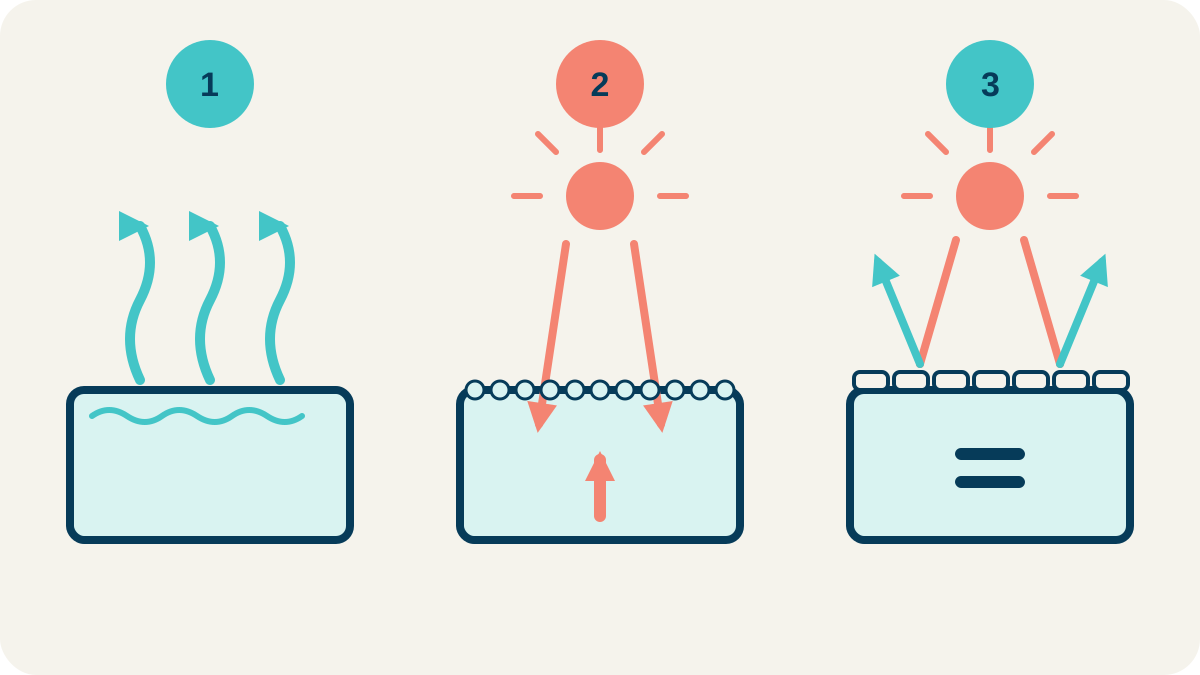
Roughly 70 percent of an outdoor pool's heat loss leaves through evaporation. It is the pool's main natural cooling mechanism, the same effect that cools skin when sweat dries. Any cover that blocks evaporation is blocking cooling, so the client's instinct about trapping heat is not wrong. It is incomplete, because a cover also changes the other side of the balance: how much solar heat enters the water in the first place.
The Gulf numbers frame the problem. Unchilled pool water in peak summer sits around 35 to 38°C. Comfortable swimming is about 26 to 29°C, and hotels typically chill to roughly 30 to 31°C. The starting point is already above comfort, so any product that adds heat is working against the project.
A transparent bubble cover makes a hot pool worse
The bubble cover, often sold as a solar cover, is designed to add heat. It lets sunlight pass into the water while blocking evaporation, and it can warm a pool by up to 8°C. In a northern climate that is the whole point. In a Gulf summer it takes water that is already unswimmable and pushes it further in the wrong direction.
If a supplier proposes a transparent bubble cover to keep a Gulf pool comfortable in summer, the specification has not been thought through. Do not pass that recommendation to your client.
Reflective slats hold the temperature, they do not lower it
An opaque or reflective slatted cover does two things at once: it blocks evaporative cooling, and it blocks solar gain, which is the main heat input. The two effects roughly cancel. The honest claim for the best reflective covers is water temperature roughly the same as an uncovered pool. Never promise cooler. A cover cannot cool a pool; closing a lid over warm water does not remove heat from it.
Slat colour decides which side of the ledger the cover lands on. Dark slats absorb solar heat and behave like a solar cover; light or reflective slats reject it. When the temperature argument matters to the client, the slat finish is not a cosmetic choice. The PVC vs polycarbonate slat guide covers the materials and colour options in detail.
What the client does gain is water. Controlled field measurements put evaporation reduction at roughly 94 to 96 percent while a solid cover stays closed. Over a full year the realistic saving is lower, around 30 to 50 percent, because no pool stays covered all the time. That gap between "while closed" and "annual" is the practical argument for an automatic cover: when closing is one button instead of ten minutes of manual handling, the pool spends far more hours covered.
With a chiller, the cover becomes the strongest combination
Once a chiller pulls the water below the surrounding air temperature, the physics reverse in the pool's favour. Heat now flows into the water from the air and the sun, and a closed cover slows both that heat gain and evaporation, so the chiller runs fewer hours to hold its set point. For a hotel holding 30 to 31°C through August, a chiller with a reflective automatic cover is the configuration where each component makes the other cheaper to run.
Summer without a chiller: run the cover by the clock
If the pool has no cooling equipment, the cover schedule can still work with the climate instead of against it. Leave the pool uncovered at night, so it dumps heat by evaporation and radiation to the night sky. Close a reflective cover during the day, so solar heat is rejected before it enters the water. Neither step takes the water below what the night weather can achieve, but together they interrupt the daily build-up that pushes water toward 38°C. In practice the routine survives only when closing the cover takes no effort, which is one more point for the automatic drive.
Winter flips the story
From roughly November to March, Gulf pool water drops to about 18 to 22°C in Dubai, and colder inland in Riyadh. Villas and hotels that heat their pools in winter benefit from a cover the classic way: it holds heat in overnight and cuts heating cost. The same slatted cover that holds the line in August earns its keep in January. The argument does not disappear, it flips with the season.
What to state in the inquiry
Temperature behaviour is decided at specification stage, so put these points in the first message:
- Pool dimensions at the waterline.
- Slat material and colour, or a request for a reflective option with its datasheet.
- Cooling or heating equipment: an existing chiller, a heat pump, or none.
- Shading around the pool, including pergolas, buildings and planned canopies, since shade changes solar gain.
- The season the client cares about most: summer comfort, winter heating cost, or both.
Our China-side review covers cover selection and slat configuration, while thermal design, equipment sizing, installation and local approvals stay with the contractor and the project engineer.
Drop the pool dimensions, slat preference and cooling equipment into the WhatsApp chat below. We will come back with cover options that match the temperature story you need to tell your client, including what not to promise.
Sources
- Evaporation accounts for roughly 70% of a pool's total heat loss — US Department of Energy figures, compiled in Recreonics' pool energy efficiency reference.
- Evaporation falls by 93.9 to 95.9% while a cover stays closed — controlled 2016 field study for the National Plasterers Council, run at the Cal Poly National Pool Industry Research Center: solid track cover 93.9%, bubble 94.9%, foam 95.9%.
- The realistic annual saving of 30 to 50% comes from US Department of Energy modelling of how covers are used in practice, not from the closed-cover maximum above.
- A standard solar or bubble cover can warm water by up to 8°C, while a reflective cover holds water at approximately the temperature of an uncovered pool — manufacturer figures published by Daisy Pool Covers (Australia) for its 525 Titanium Cool product. These are vendor claims, not independent measurements.