
PVC or Polycarbonate Slats for a GCC Pool Cover?
Compare the actual PVC and polycarbonate slat profiles offered for a GCC pool project, including span, UV construction, heat and water treatment.
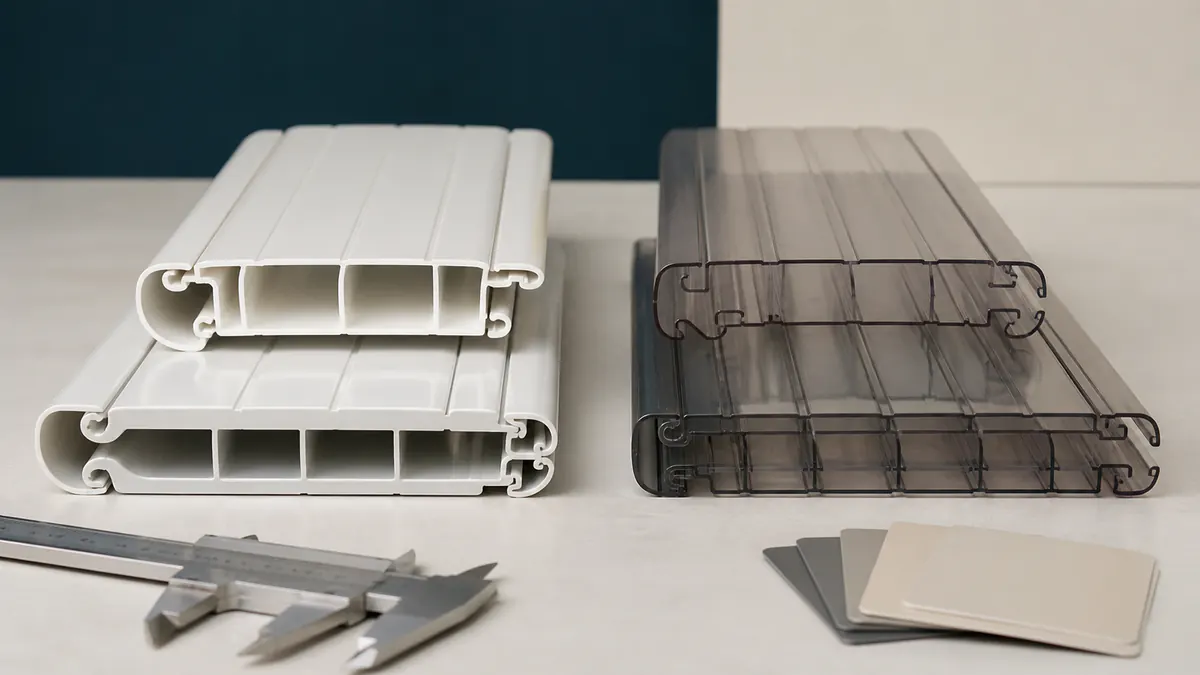
One supplier calls PVC economical. Another calls polycarbonate premium. Neither description tells you whether the offered slat suits the pool on your drawing.
For a contractor, the risk is not choosing the less impressive material name. It is quoting a profile that later fails the supplier's span, colour, temperature or water-treatment limits. Compare the finished profiles, not the marketing labels.
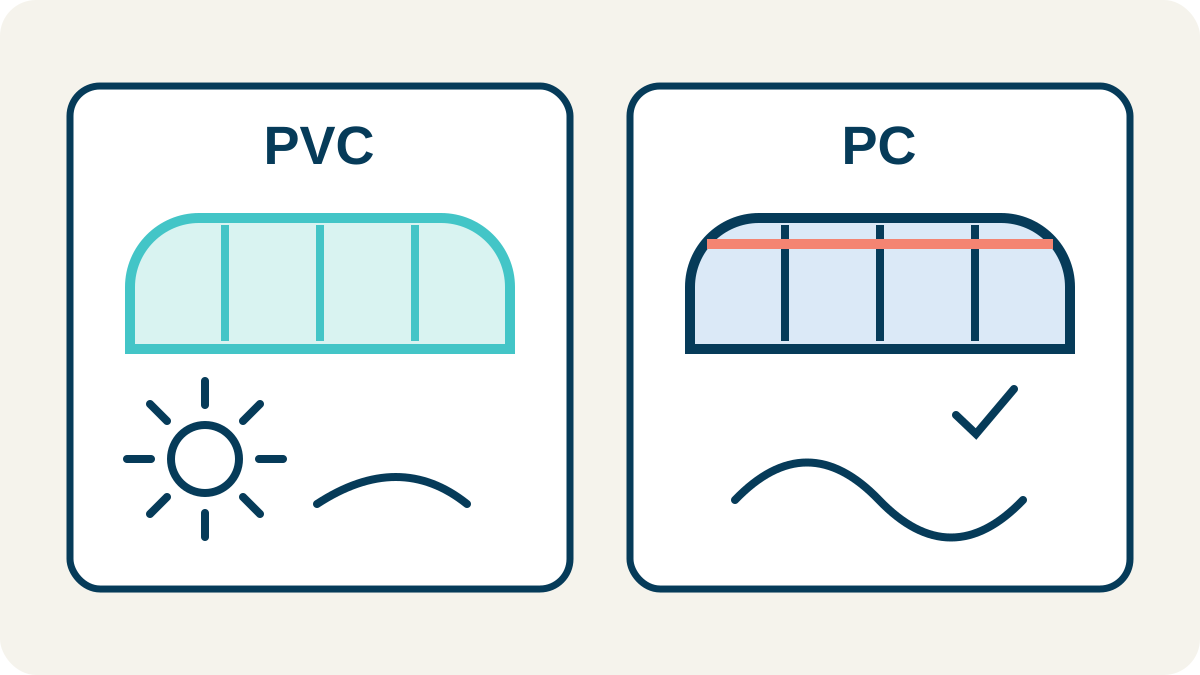
SABIC's polycarbonate overview describes the resin family as having high impact strength and thermal stability. That does not validate every finished cover slat. UV layers, chamber geometry, end caps, welding and supplier limits still determine the product you are buying. PVC profiles vary too.
Give both suppliers the same pool conditions
Before comparing prices, answer five questions:
- What is the clear waterline span?
- Is the pool indoor, shaded or exposed to direct sun?
- Which water-treatment method and operating range will be used?
- Is light transmission or solar gain wanted, acceptable or unwanted?
- Which colours and budget range suit the project brief?
Keep these answers with the automatic cover drawing package. A material comparison without the pool conditions is only a catalogue comparison.
What to check on a PVC offer
PVC slats are commonly offered as opaque, multi-chamber profiles in a broad colour range. Their initial material cost can be lower than many polycarbonate options.
Ask for the exact profile reference and review:
- maximum recommended span;
- stated UV stabilization;
- operating temperature range;
- colour restrictions for exposed locations;
- end-cap and sealing construction;
- stated water-treatment compatibility;
- warranty conditions and exclusions.
PVC may be a sound option when that specific profile fits the span and environment. Do not turn it into a blanket rule for every indoor pool or villa project.
What to check on a polycarbonate offer
Polycarbonate profiles are often considered when the brief values rigidity, impact performance, thermal behaviour or transparent and solar constructions. The price difference only makes sense when the offered profile documents the property your project needs.
Ask how UV protection is provided, which face must point upward and whether installation orientation affects the warranty. Confirm span and temperature limits for the exact colour and construction, not for a different profile in the same brochure.
GCC conditions make the details matter
Direct sun
An outdoor slat surface can become hotter than the air. Use the finished profile's stated service conditions and colour restrictions. A generic polymer datasheet cannot replace them.
Pool water
Tell the supplier whether the system uses salt chlorination, chemical dosing or another treatment. The assembly includes end caps, joints, shafts, tracks and fasteners, so compatibility is wider than the slat body.
Span and wind exposure
Use the supplier's documented span limit and configuration rules. "Hotel pools need polycarbonate" is not a technical selection.
Light and solar gain
Transparent or solar profiles can affect heat and light entering the water. That may support one operating plan and work against another. Treat it as a design choice.
Compare named profiles on one sheet
Place the two offers side by side with these rows:
- manufacturer and profile reference;
- material and chamber construction;
- UV-protection method;
- approved span for the proposed arrangement;
- temperature and water-chemistry limits;
- colour and transparency;
- end-cap and sealing method;
- warranty scope;
- price difference and lead time.
Then connect the choice to the seven automatic cover pricing factors and the edge conditions in the skimmer vs overflow guide. If the slats are going onto a cover you already own rather than a new system, the replacement slats and spares route starts from photos and measurements instead of a full drawing.
We collect the China-side profile data, set the options against the stated pool conditions and record the selected profile before production. The project engineer keeps final material and system approval. The operator is responsible for water chemistry and maintenance within the approved limits.
Share the drawing, destination, water treatment and sun exposure in WhatsApp. If both materials are technically available, ask for two named profiles. You will have a comparison that makes sense in a client meeting.