
Pool cover energy and heating in the Gulf
A pool cover reduces evaporative heat loss, helping a heated pool retain warmth between swims. For Gulf summer use, match the cover to the cooling equipment and sun exposure: a cover does not actively cool the water.
Match the cover to the thermal job
Start with the equipment, then check the surface material and hours of use.
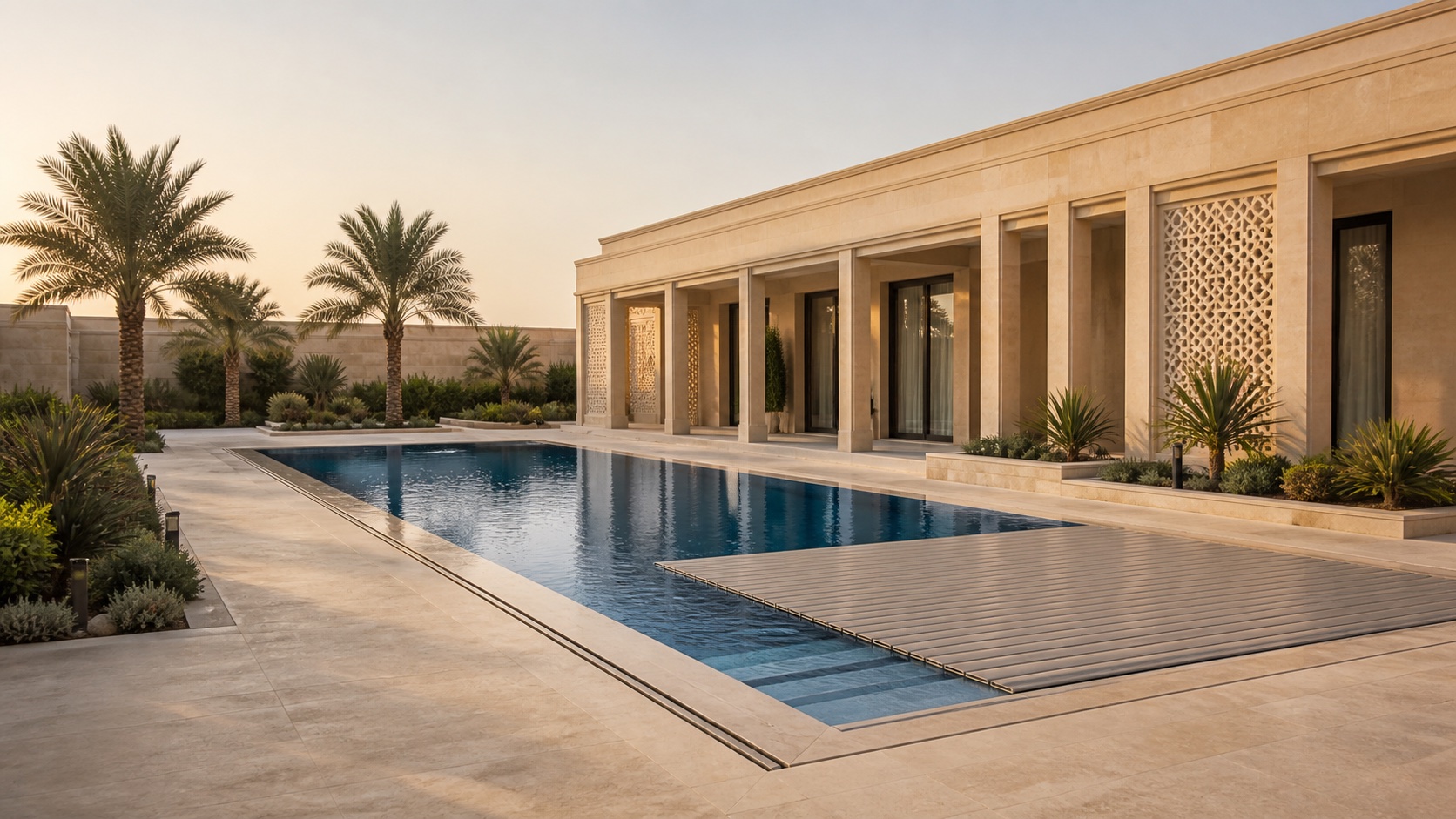
Before you compare cover quotations
- Heated pool: retain warmth while the pool is unused.
- Chilled pool: assess the complete heat balance with the equipment and cover details.
- No heater or chiller: balance water retention against the need to release heat.
- Ask for the proposed material and daily deployment method, not a universal savings percentage.
Choose for the pool’s operating mode
Use the actual heating or cooling requirement rather than a fixed Gulf calendar. Coastal exposure, shade, wind and swimming hours can change the result at the same site.
| Pool condition | Cover’s thermal role | Main failure or wrong assumption; prevention |
|---|---|---|
| Pool conditionWinter heating in use | Cover’s thermal roleReduce evaporation and retain heat between swims. | Main failure or wrong assumption; preventionA cover left on the reel provides no surface benefit. Choose a deployment method the operator can use routinely. |
| Pool conditionSummer chilling in use | Cover’s thermal roleAssess reduced surface exchange alongside solar gain and the loss of evaporative cooling. | Main failure or wrong assumption; preventionAssuming any cover cuts the chiller bill. Review the offered material, shading, setpoint and covered hours together. |
| Pool conditionNo active heating or cooling | Cover’s thermal roleConserve water, while checking whether retaining heat is desirable. | Main failure or wrong assumption; preventionKeeping an already hot pool covered without reviewing temperature. Agree a supervised operating plan with the pool operator. |
Why covering a heated pool reduces heat loss
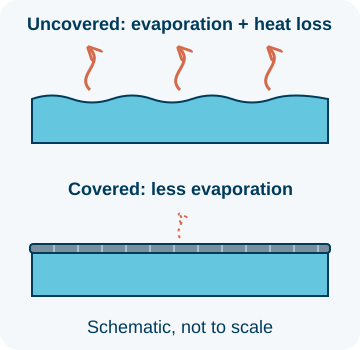
Evaporating water carries heat away. A deployed cover reduces this loss, so the heater has less heat to replace under otherwise comparable conditions. It also changes other surface heat exchanges; the result depends on the material and site.
As a US reference, EPA’s September 2022 residential-pool guide reports that solid pool covers, when in use on heated pools, can save 50–70% of pool heating costs. Use that range to understand the potential importance of covering, then base a project estimate on its setpoint, climate and actual use. It is not a Gulf annual electricity forecast or a chiller-saving figure.
Specify the surface and the deployment method
For a Gulf summer cooling objective, ask about opaque or reflective surfaces and non-solar slat configurations. EPA describes solar and bubble covers as products designed to heat water. Avoid a transparent solar bubble cover for this objective, and confirm whether the particular slat being offered is intended to collect solar heat. The word “slatted” alone does not establish thermal behaviour.
Compare manual and automatic operation against the pool’s daily routine. Check roller or storage space, access and the edge arrangement on the drawing. Thermal suitability also does not establish safety-cover certification; request the documents for the quoted configuration separately.
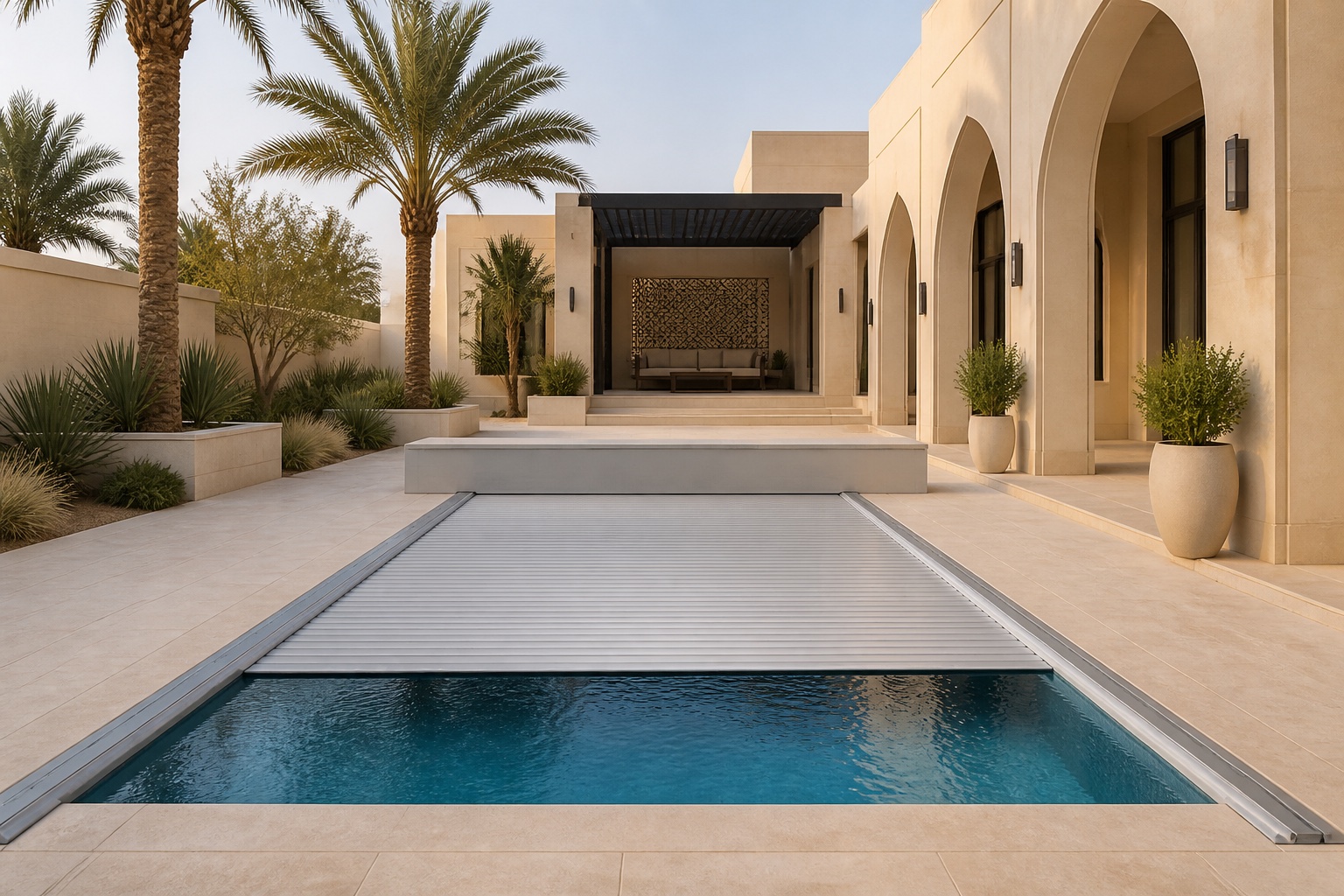
Covered hours are an input to the estimate
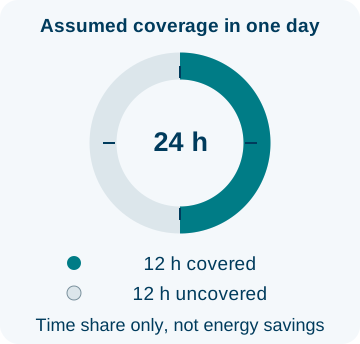
A cover works at the surface only while deployed. Record the actual opening and closing times. For a hot unchilled pool, discuss any night-time opening intended to release heat with the operator and maintain the site’s access protection. A calendar-only instruction to keep every pool covered all summer misses this trade-off.
Calculate the electricity difference before quoting savings
For an electric heater or chiller, use metered electrical energy over comparable periods. Keep the water setpoint, swimming hours and circulation arrangement consistent, and record weather and covered hours. Weather differences need adjustment before attributing a change to the cover. Variable-output equipment makes running hours alone an unreliable substitute for kWh.
Electricity difference (kWh) = comparable baseline consumption − consumption with the cover
Hypothetical arithmetic only: 120 kWh − 90 kWh = 30 kWh less electricity for the comparison period. These are assumed readings, not a measured project or predicted saving.
Energy-cost difference = verified electricity difference × the applicable electricity tariff.
For a fuel-fired heater, compare the relevant fuel meter or delivered-fuel records instead. Keep circulation and other plant loads separate when they have not changed.
Compare the complete ownership cost
Ask suppliers to separate installation and operating assumptions. A lower purchase price can be offset by a cover that the operator seldom deploys or by unclear replacement terms.
| Cost item | What to request or record |
|---|---|
| Cost itemCover and installation | What to request or recordMaterial, edge or track arrangement, roller or drive, storage space and installation scope. |
| Cost itemHeating or chilling energy | What to request or recordEquipment details, setpoint and comparable metered consumption, with covered hours stated. |
| Cost itemWater and cleaning | What to request or recordActual top-up records and cleaning effort; avoid counting the same benefit twice. |
| Cost itemMaintenance and replacement | What to request or recordCare requirements, parts access, replacement material identification and written warranty terms. Use the quoted terms rather than a fixed Gulf replacement interval. |
What to send for a cover quotation
Send these inputs to PoolProject so the cover discussion starts with the pool and equipment you actually have. Include the heater or chiller data sheet if available; selected material properties and any project performance estimate need confirmation against the proposed configuration.
| Item | Why it matters | Example format |
|---|---|---|
| ItemCity and exposure | Why it mattersIdentify the climate context and sun or wind exposure. | Example formatCity, outdoor/indoor, shaded/open, clear site photos. |
| ItemPool and edge details | Why it mattersCheck cover layout, storage and usable surface coverage. | Example formatDimensioned plan, edge section and equipment-end photos. |
| ItemExisting or planned equipment | Why it mattersDistinguish heat retention from a cooling requirement. | Example formatHeater/chiller model, data sheet, water setpoint and operating mode. |
| ItemUse and deployment | Why it mattersAssess whether the proposed operation fits the site. | Example formatSwimming hours, actual covered hours, operator or owner routine. |
| ItemConsumption records, if estimating cost | Why it mattersGive the estimate a defined baseline. | Example formatDated electricity or fuel readings with weather and setpoint notes. |
Share plans, city and equipment details. Material, fit, supply scope and commercial terms are confirmed in the quotation.
Method and sources
Updated October 2026. The thermal explanation uses EPA’s residential-pool guide (September 2022, pages 2–4) and DOE’s commercial-appliance report (2015 update, section 7.6.3). Both describe heat-loss reduction in heated pools; neither establishes a saving for a particular Gulf chiller installation. The comparison tables apply those relationships to the cover-selection inputs above. The arithmetic and time-coverage diagram use explicitly assumed inputs. Sources checked 18 October 2026.
- EPA: Jump Into Pool Water Efficiency, pages 2–4 (PDF)
- DOE: Energy Savings Potential and RD&D Opportunities for Commercial Building Appliances, section 7.6.3 (PDF)